
#58 Studio Kallang's Faezah Shaharuddin on when a design clicks
stop explaining your work, see what happens

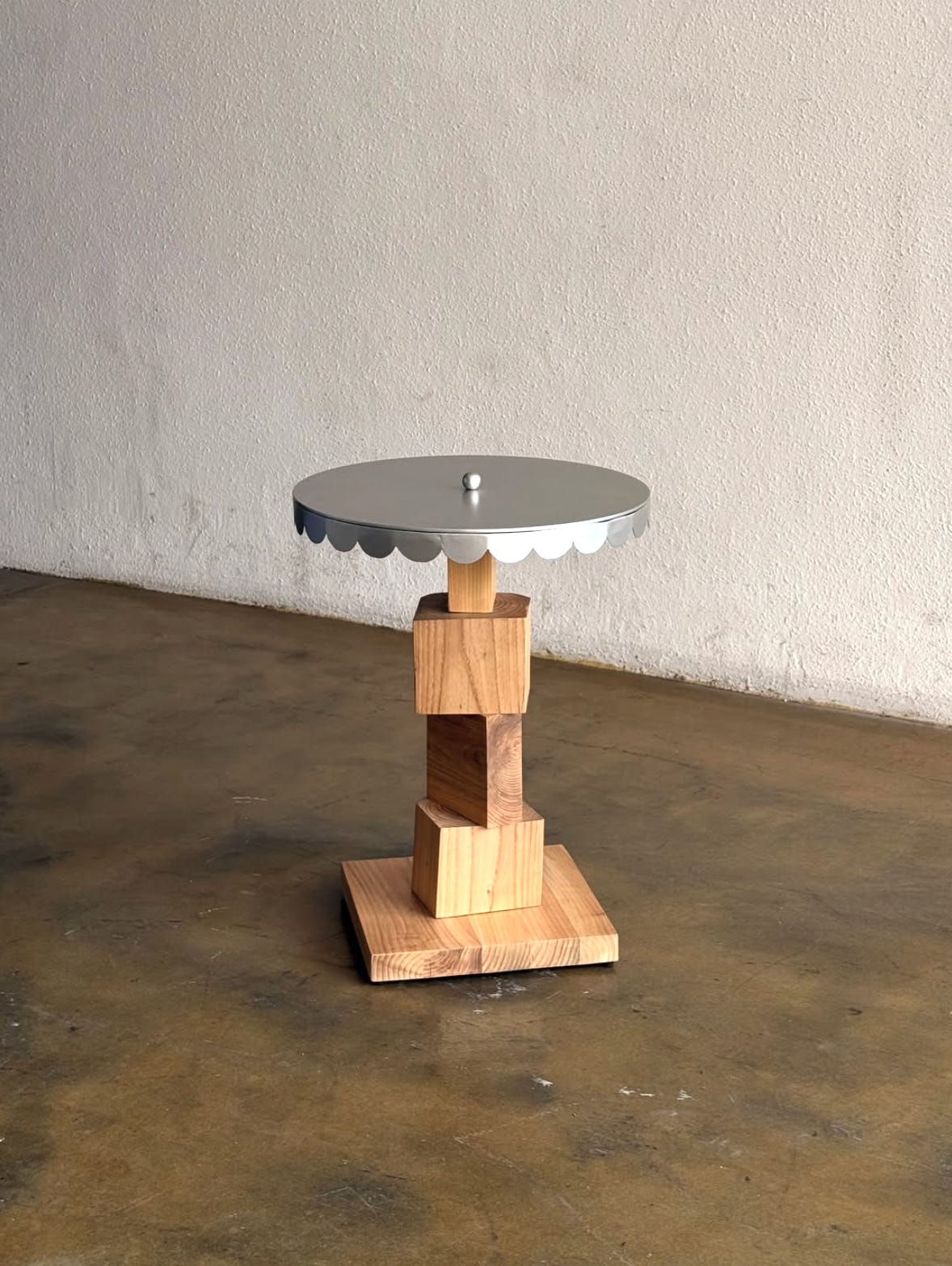
Beneath a photo of a double-drawer nightstand: might call her Turmeric x. Another photo: vanities are sacred idc. And my favourite: wonky lil guy. (I’ll show you him at the end.) These are captions as you scroll through Studio Kallang’s Instagram filled with renders of objects, designs in situ, stools and tables all over the world, a colourful bowl of ice kachang in the mix. Inspiration is everywhere.
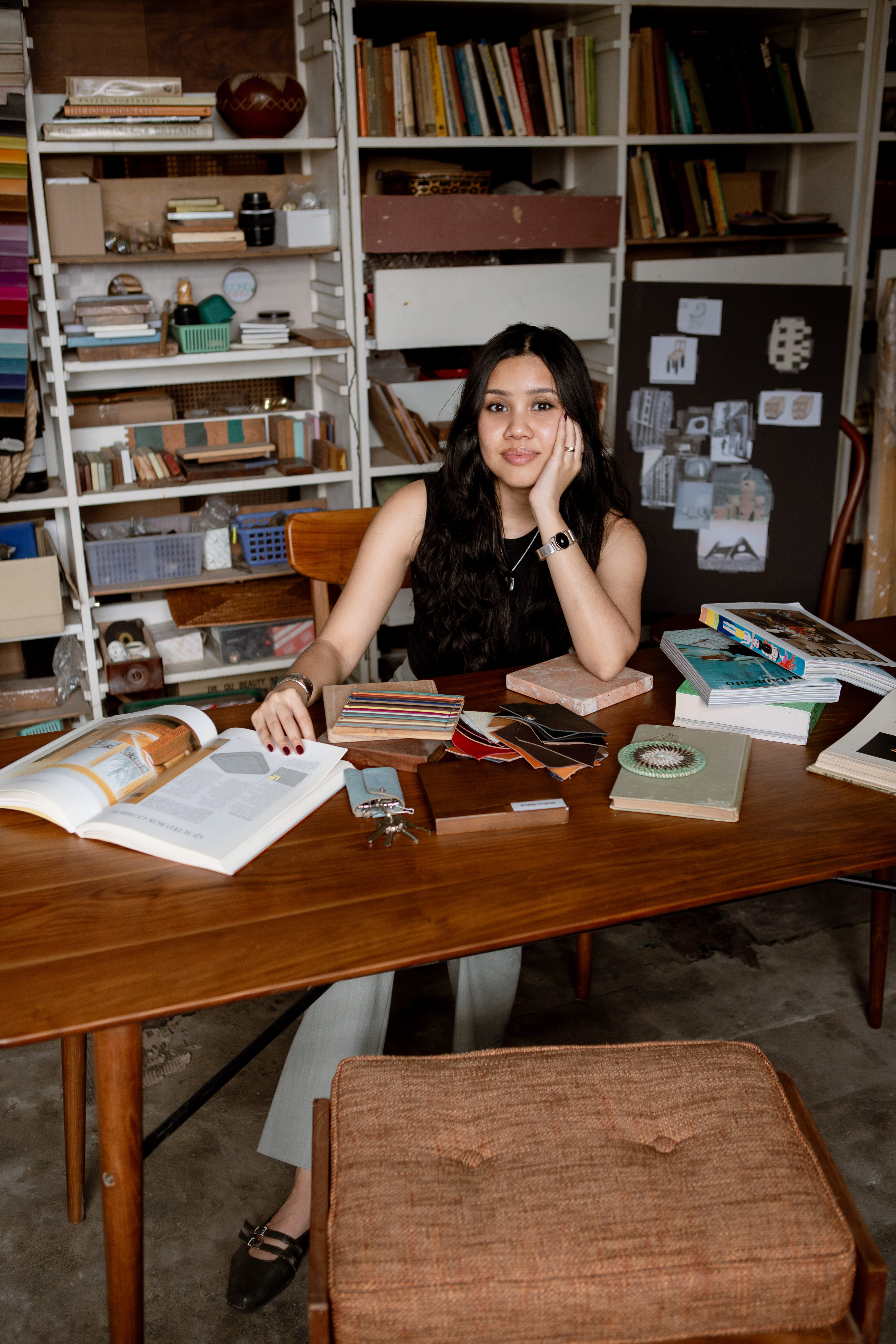
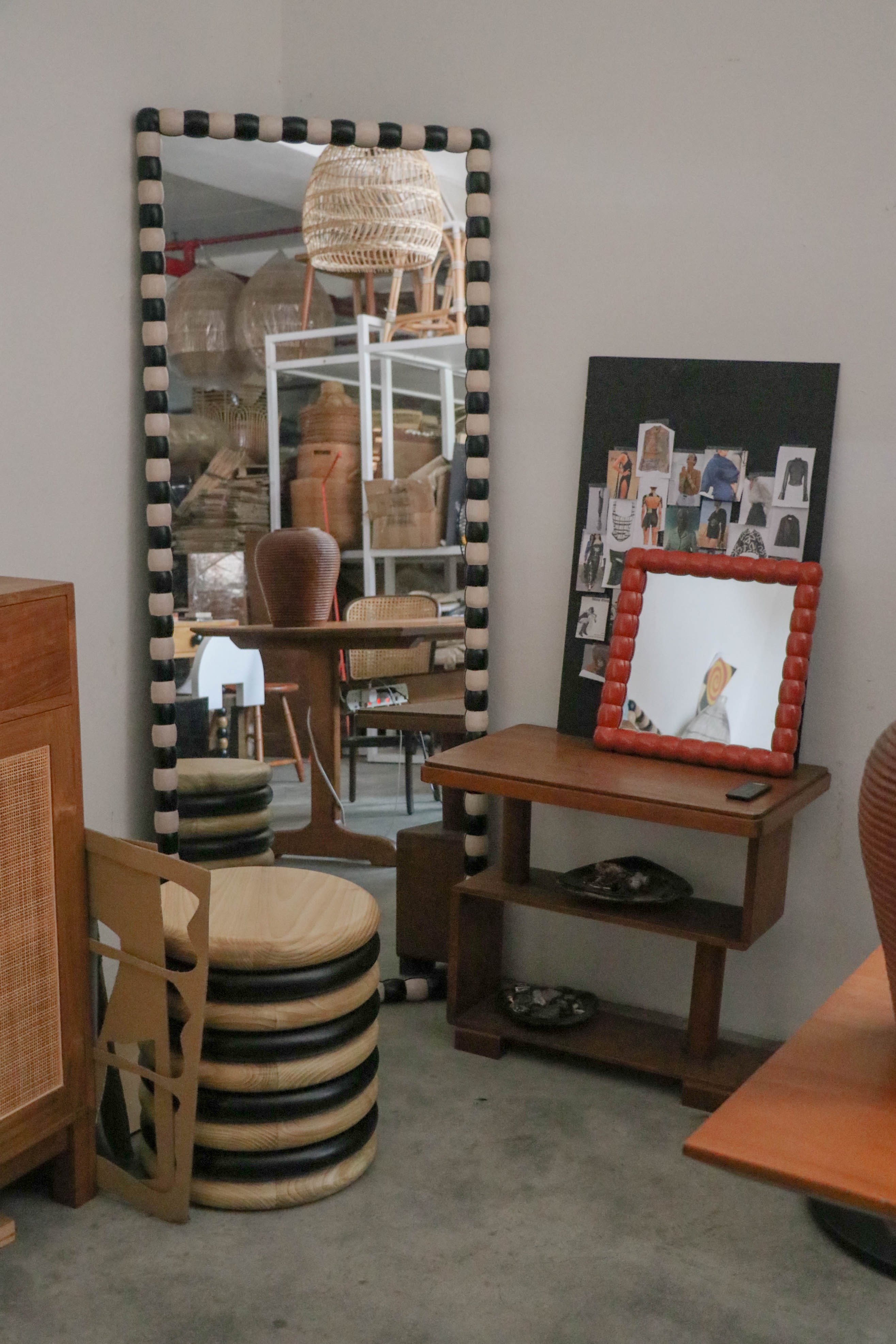
Studio Kallang is a furniture label run by Faezah Shaharuddin, with studios in Singapore and New York City. Her work, rooted in personal and cultural histories, nods to the foods she grew up with and the sights she encounters as she travels and returns home. The pieces are at once elegant and quirky, playful yet timeless. You might recognise her onde mirrors, featuring her signature beaded frame, onde being a chewy, ball-shaped dessert for the uninitiated.
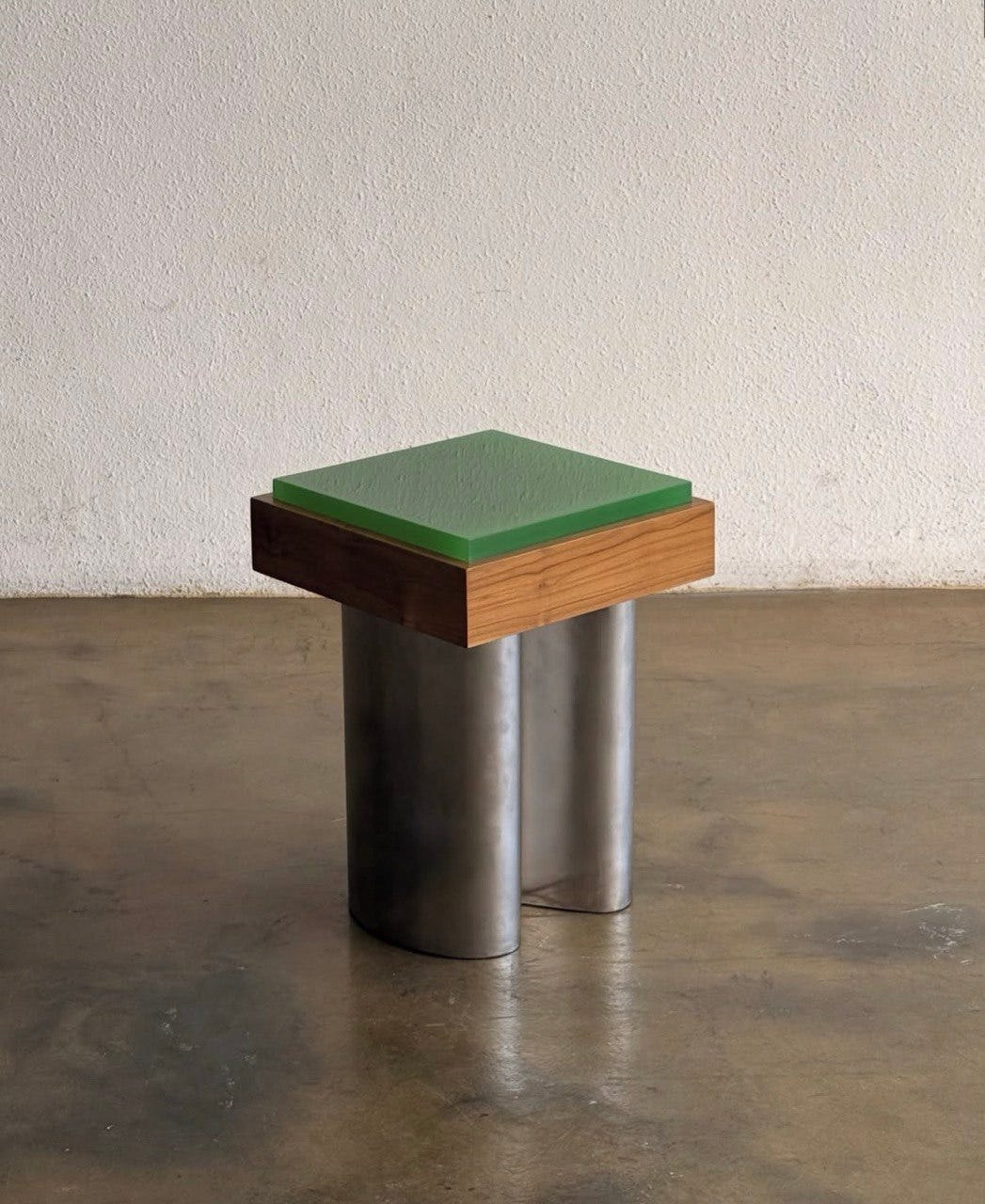
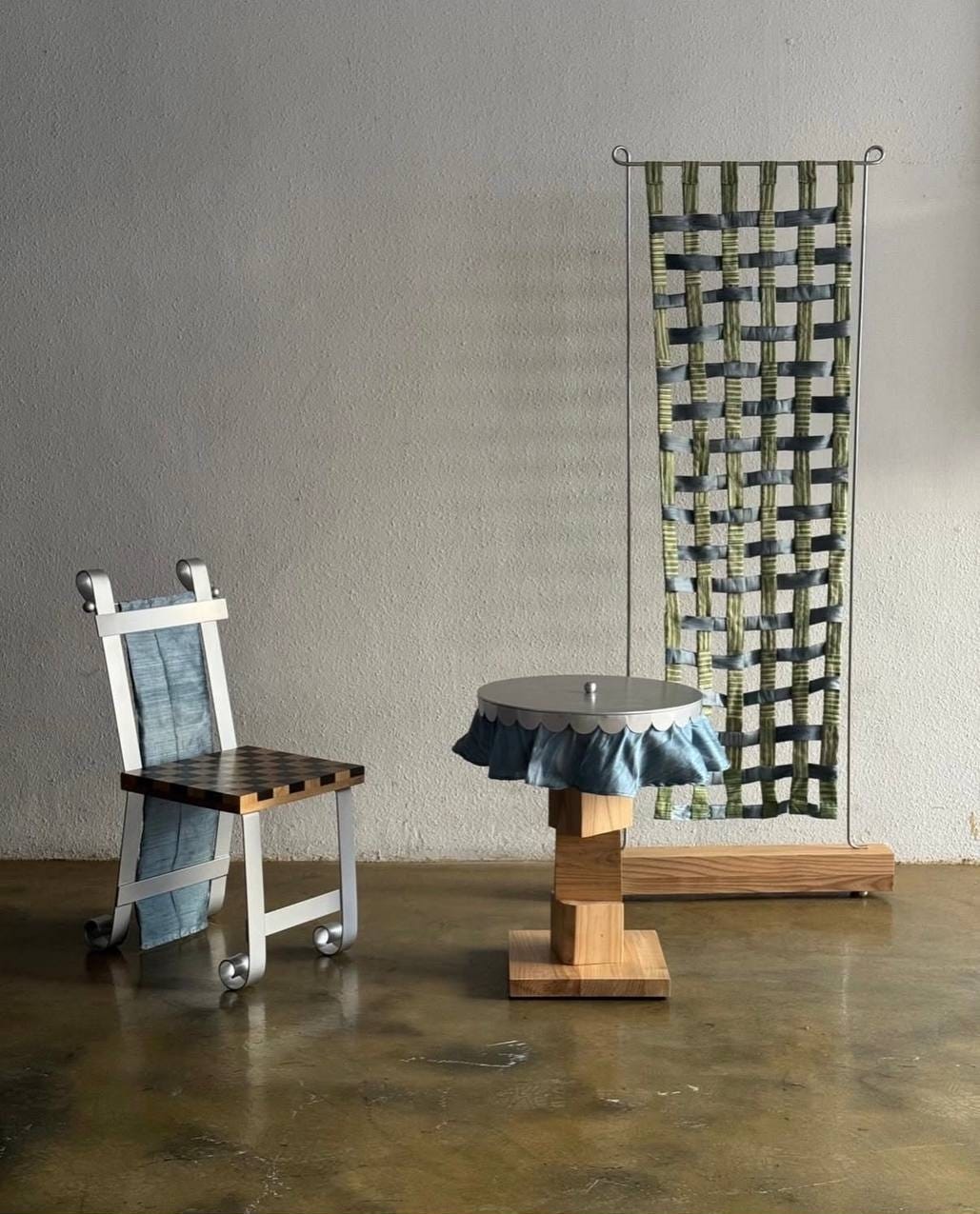
It is the anomalous mix of materials that draws me in: wood and metal offcuts paired with textiles in a series aptly called Unlikely Fragments, or, more recently, the Agar Table—made of resin, teak, and stainless steel, with a sharp square top and curve-edged legs. She often teases work through renders, revealing finished pieces months on. A commenter on a post once asked, “Very cute ! Are these actually made or just renderings ?” Sometimes you really can’t tell. She keeps us on our toes.
While you can never quite guess where Faezah is in the world, Studio Kallang’s works are available on 1stDibs, Adorno, Galerie Philia, The Oblist, and SSENSE. If you’re lucky, you might have seen her work at a Diptyque flagship, or at Milan Design Week or Singapore Design Week.
Here, Faezah shares why the places she designs from matter less than you’d think, how she knows when a piece feels right, and what draws her to the in-between.
PIN: Going between Singapore and the US, do you notice your ideas or creative process shifting in any way?
FAEZAH: I don’t think the general framework changes. I kind of see my mind as a thing that filters and translates whatever’s put through it. If my output is different it’s because the input has changed. If I’m in NYC, the input is everything around me when I’m there, and the same goes for when I’m in Singapore, Indonesia, or wherever.
I think it’s also important to note that whatever passes through is ultimately still coloured by my core philosophies, values, and point of view. It’s a combination of the unpredictable (environment changing) and some constants, like my personal history and identity.
PIN: Many of your pieces come to balance nostalgia with modernity. How do you think about that tension when you design?
FAEZAH: Most of it comes intuitively. I would see or think of an artefact, or a form, or a texture that feels nostalgic to me, and then I play around with different combinations until the balance or tension feels right.
I consume a lot of influences from all time periods with no specific goal in mind, but then they end up existing in my subconscious somehow—like a mental library I can pull from when I do start designing something. It feels like placing different references on a scale; if it feels too far on one end of the nostalgic-modern spectrum, I adjust accordingly.
PIN: When you travel, you often share textures, forms, or small scenes that catch your eye. Do you ever look back at those photos or notes for ideas, or do they tend to reappear later in unexpected ways?
FAEZAH: Sometimes I do! I think even just the act of capturing the images ends up framing the moment in a way that helps me remember it better, almost like how writing something down can preserve a thought, even if I don’t revisit it directly.
Seeing the pictures and the colours or textures side-by-side also helps sometimes, like piecing together a puzzle. I love when I have a moment of Ah, that feels right, there’s something there.
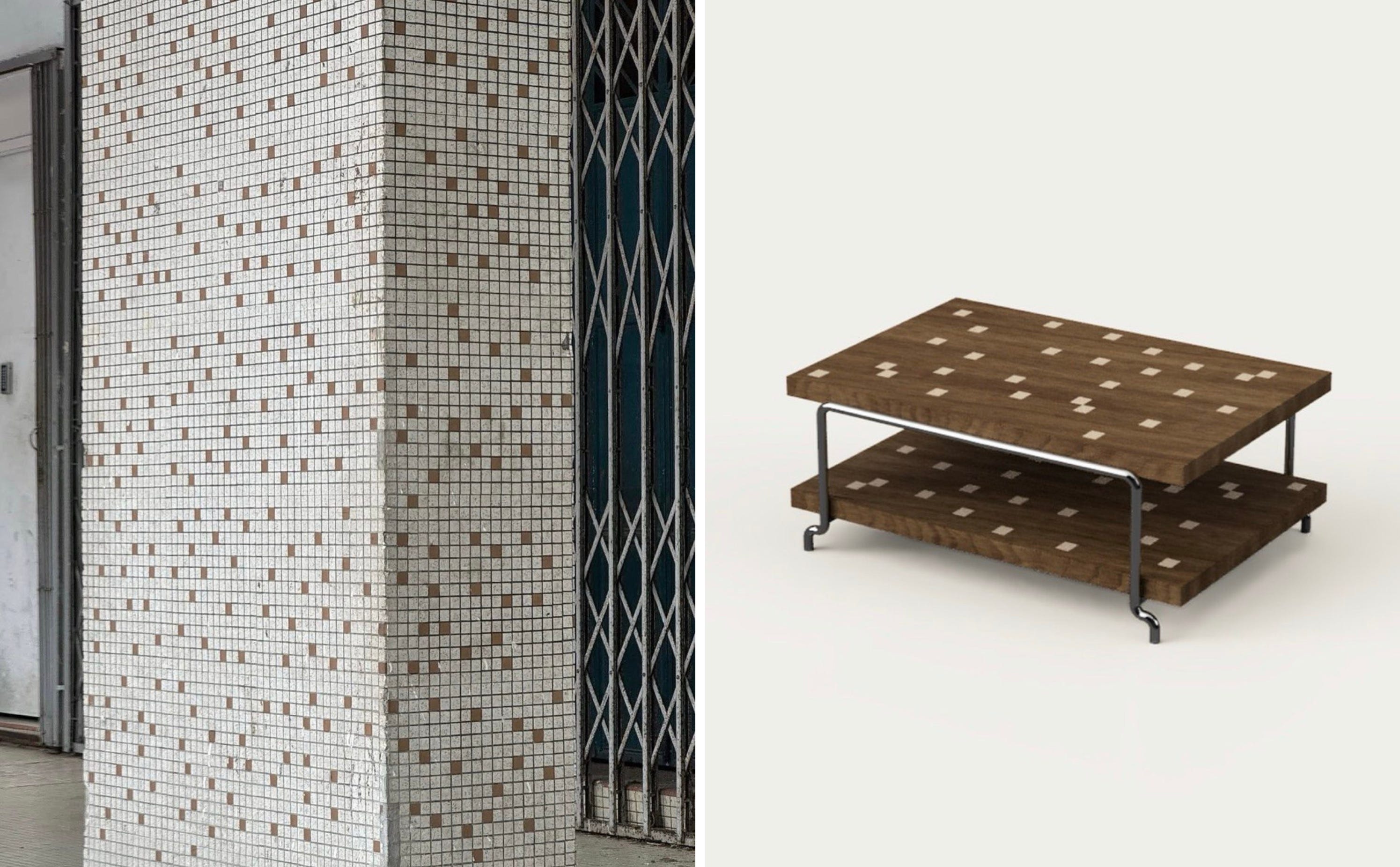
PIN: Some of your pieces feel familiar but also surprising—like in Unlikely Fragments, they just work. What tells you that a piece has come together?
FAEZAH: It’s this ineffable feeling when things click. You just know it’s right.
Once I feel that, I like to show the work to people I trust without saying a word. Their first reaction tells me everything. If there’s a slight pause or any uncertainty then I go back to the drawing board. It either resonates or it doesn’t.
The fun part for me too is when I have to let go of the work and let it exist in the world, because people end up attaching their own perspectives and creating their own meaning from it in a way I can’t predict. I actually dread writing long explanations of why I did what I did, because it almost feels reductive. There’s a kind of magic when people figure it out for themselves.
PIN: You’ve spoken before1 about bringing poetry into your work, and about your father exposing you to literature and music early on. How do those early influences show up in the way you design or think about form?
FAEZAH: One of the best things my dad ever told me was that knowledge shouldn’t be compartmentalised, and that everything can be considered an art. The ideas that shape a great piece of writing, or music, or a great film, can be applied to any other field and vice versa. Poetry can exist as much on a page as in architecture or dance or food. This fundamentally shaped how I think about creativity, how quite literally everything can inform your process if you care to pay attention.
PIN: What kind of environment do you think helps you do your best work?
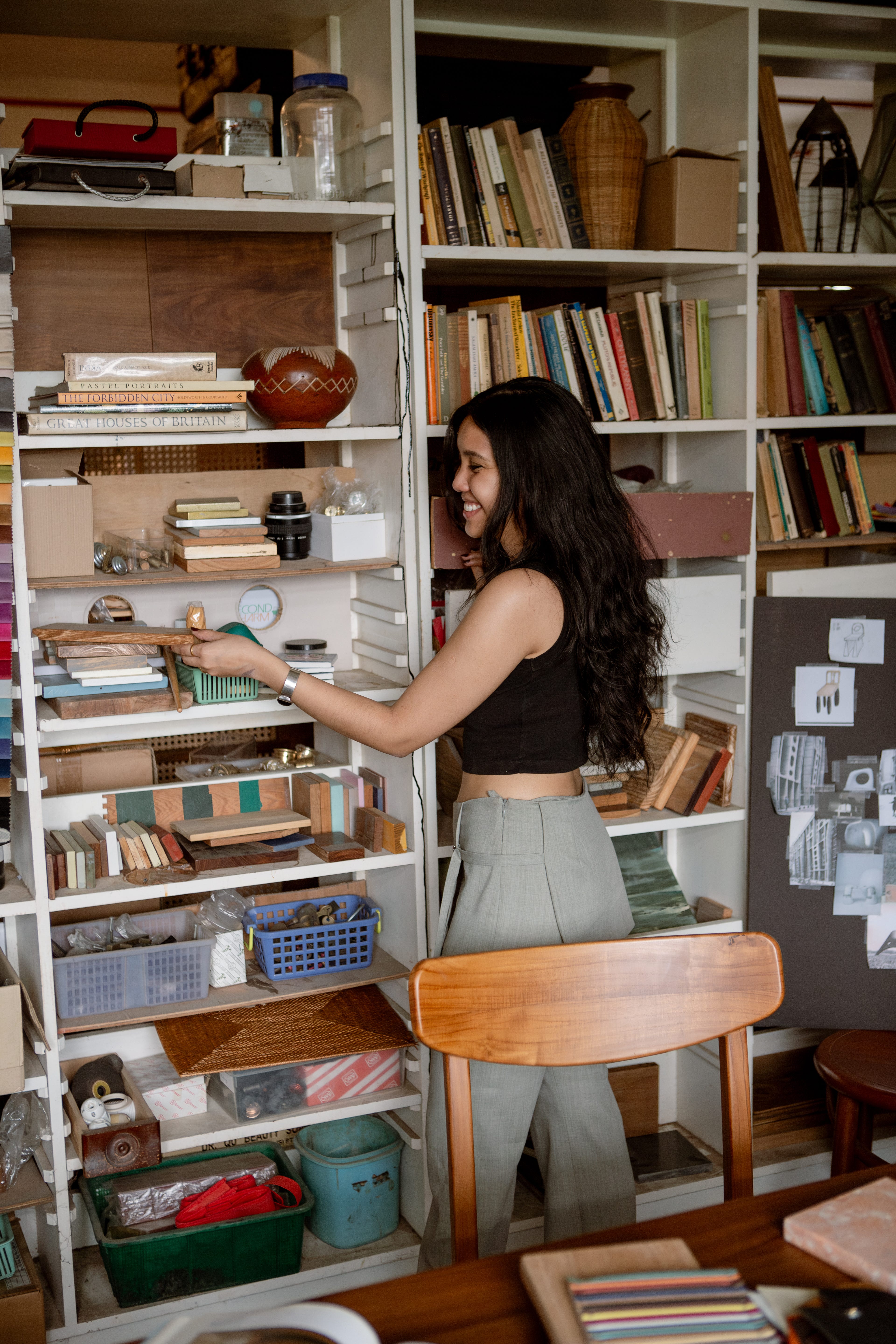
FAEZAH: Ideally, a beautiful space where I’m surrounded by objects and images that I love and resonate with, and all the time and headspace in the world. I’d want my books spread across the table and the floor and the chairs, maybe an occasional guest every now and then. I love films and music, so my environment usually ends up feeling somewhat cinematic.
Of course, pragmatically, I travel a lot for work and sometimes it’s just not realistic to only design in an idealised studio. Sometimes I have to whip out my laptop and work at a random airport lounge with a protein bar and bad coffee because we have deadlines to meet.
PIN: Who is someone you’re curious about right now? If you could ask them one question, what would it be?
FAEZAH: I’m usually curious about people I respect who are ahead of me—career-wise or age-wise—so it’s difficult to name one. The question would be, “What are the most important things I should know before I aspire to be where you are?”
PIN: Lastly, you have said that you’d like to be a cyborg.2 What about that idea appeals to you?
FAEZAH: It started when I read Donna Haraway’s feminist text A Cyborg Manifesto in college. I like the idea of operating outside socially imposed identities and the blurring of boundaries. Coming back as a cyborg feels empowering and freeing in that sense, because it implies subverting command and control.
You can find Faezah on Instagram @faezahshaharuddin, and Studio Kallang via their website and @studiokallang.
Photos of Faezah by Rachel Loh.
If you enjoyed this, you might also like these earlier interviews:
#37 the fantasy of Closet Children

Nothing makes me feel quite like when I wear my Closet Children vertebrae earrings. Perhaps strikingly different from the rest of my outfit, it also makes it more ‘me’. It’s one of those things that lends confidence, protecting you from the outside world. “A cloak of armour”, as its founder Rachael Cheong calls it.
#39 the making of netnets ft. founder Kim D'Aria

I love a handmade small business moment. To see a brand find its footing and take each step unhurried, constantly selling out and keeping its followers yearning for more, has its own kind of satisfaction. netnets, a brand of hand-knotted bottle holders, slings, and key rings, is a key example of this.