

Babe wake up, it’s time for breakfast.
For a few months, I became a morning person. Once, sometimes twice a week, I sat down for coffee with someone new. We’d connect through an app called The Breakfast. The premise is simple: every day at 11am, it introduces you to one person in your city. You choose whether you want to chat, and if the interest is mutual, the conversation likely leads to meeting in person.
Different conversations went down different paths. We might start with what we do for work, then go deep on family; or connect quickly over dating, then veer into side projects; our dreams, ideas of home, and how we ended up here. Some of the people I met have become friends. Most of them I would never have crossed paths with in my day-to-day life.
In a world of increasingly optimised and frictionless ways of living, in-person conversation—especially with someone new and no fixed agenda—makes me feel alive. It is one of the few things we have left that can still feel clunky, raw, imperfect, full of detours and digressions and epiphanies. You do not always know what you are looking for until someone across the table says something that opens a door.
As I was planning my sixth breakfast, The Breakfast team was wrapping up a community fundraising round on Wefunder, which raised over $380,000. I hopped on a call with co-founders Eteri Saneblidze and Lisa Oreshkina, who were sitting side-by-side in their Lisbon studio.
We talked at length about designing technology for offline connection, refusing the filters people have come to expect from social apps, intentionally holding back on launching in new cities, and why they decided to invite their own community to invest. My biggest takeaway from using the app, which I’ve come to learn is the intention behind it all: The Breakfast is as much a medium for self-discovery as it is for social connection.
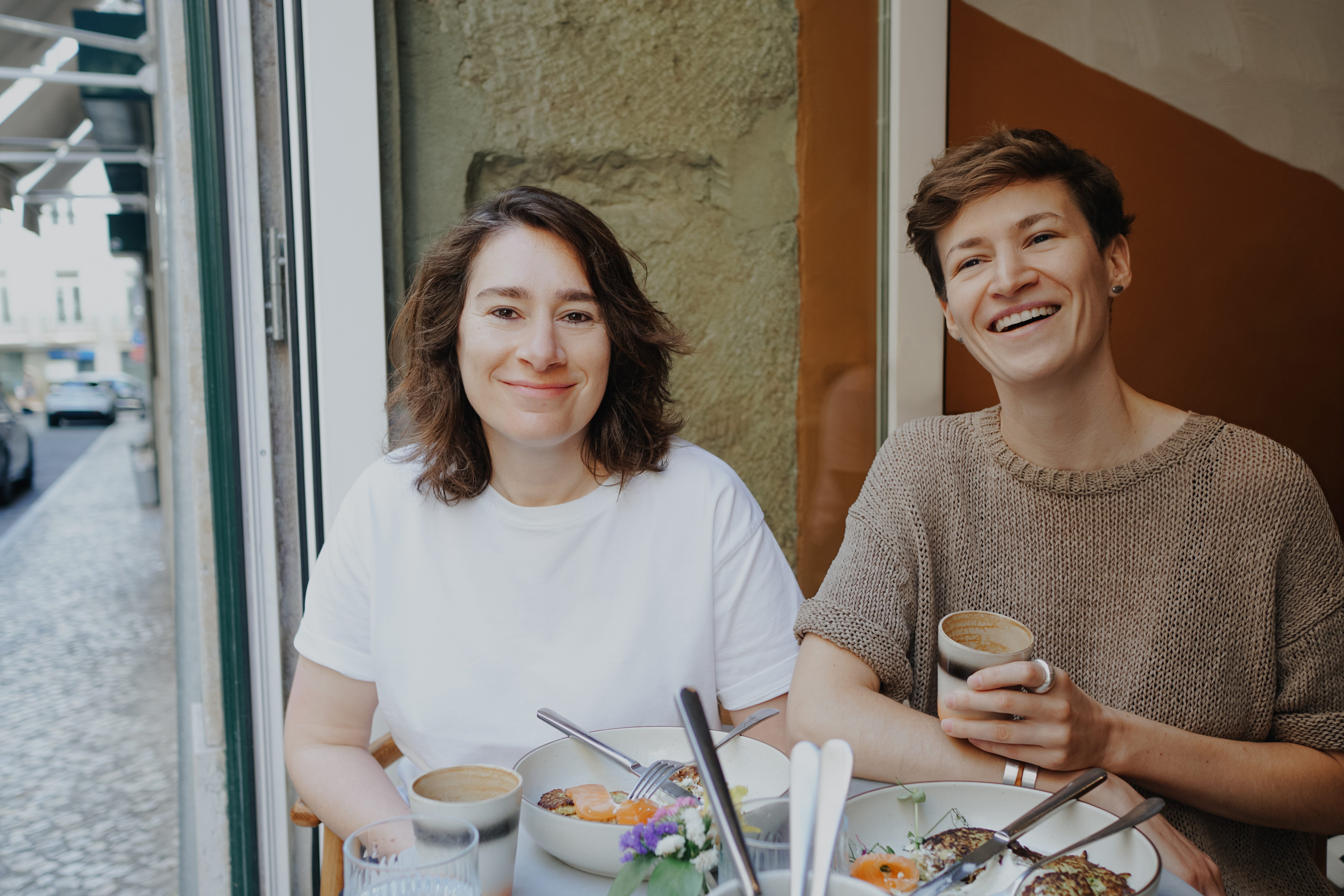
When we started The Breakfast, we used the tagline “the human app.” We removed it because it was too early to say that. But eventually, our goal is to bring it back. Because it is a human app. We are solving the fundamental human need to connect.
When did you decide to go all in and take The Breakfast from a side project to a full-fledged operation?
Eteri: From the very beginning, the question was: do people want to meet new people without dating apps and networking events?
We launched a survey and found that there were people who simply wanted conversations with new people, and they were actively finding ways to make that happen. We then made a landing page, and a lifestyle magazine wrote about us. The waitlist started growing. Once we launched, we saw our first breakfasts happening, while even more people signed up to join.
That was the moment we decided: we needed to focus on building the technology for the way people meet people.
You’re using an app to design an offline experience. How do you know what’s working?
Eteri: We have breakfast. So we get feedback all the time.
We are very close to the community here in Lisbon because we are headquartered here. Whenever we travel, we also have breakfast with people in those cities.
One thing we built from the very first day was a support chat inside the app. Whenever people message us, everyone on the team gets a Slack notification. We can see what the problems are. At some point, you start seeing clusters of certain problems people are facing, and we fix them one by one. It is interesting because when you fix something, one cloud of topics disappears from the support chat. But then you have something new.
It is a kind of conversation. It is a dance. You build something, it creates a certain culture, and you are either happy with that culture or you are not. Then you update the app a little, and it updates the culture a little. It evolves with people.
What is something The Breakfast would never want to do?
Eteri: We will never turn on a gender filter, and likely not an age filter either.
We believe that if people want to put themselves into filter bubbles, that already exists on the market. It did not help us create more beautiful conversations or greater connections.
I really got along with a guy in his fifties—hi Pedro, I know you’re reading this!—and I doubt we would ever have had such deep conversations if not for The Breakfast.
What are some features you will be building next?
Eteri: One big one is help with scheduling. Social health and social experiences have been part of our lives forever. But at the same time, I think we need to approach them differently now, in the way we do with mental health or sport.
We dedicate time to meditation, therapy sessions, or exercise. We know how to implement those things into our lifestyles. We are intentional about them. But we are not always intentional about our social lives. And that needs to happen.
If you meet just one person a week, that is 50 conversations a year. Our goal would be to help you find that time every week—to be a little more intentional, while still keeping the playfulness.
We are also going to redesign the profile. We want to make it work with less information, and we do not want to connect your other social accounts, but we want there to be enough information to spark curiosity about another person.
That is really hard in the modern world because I think we have acquired certain patterns of scrolling past people and immediately judging them.
Then there is the feedback you leave after you have had breakfast. We met a few members, and they all mentioned the part where we ask who talked more. They would say, “I realised I talked too much.” They only realised that because they saw it consistently through the feedback process. It shifted the way they spoke to people after that.
When you have a conversation with someone, you get to know yourself as much as you get to know the other person. If we can help highlight those things about yourself, that is beautiful.
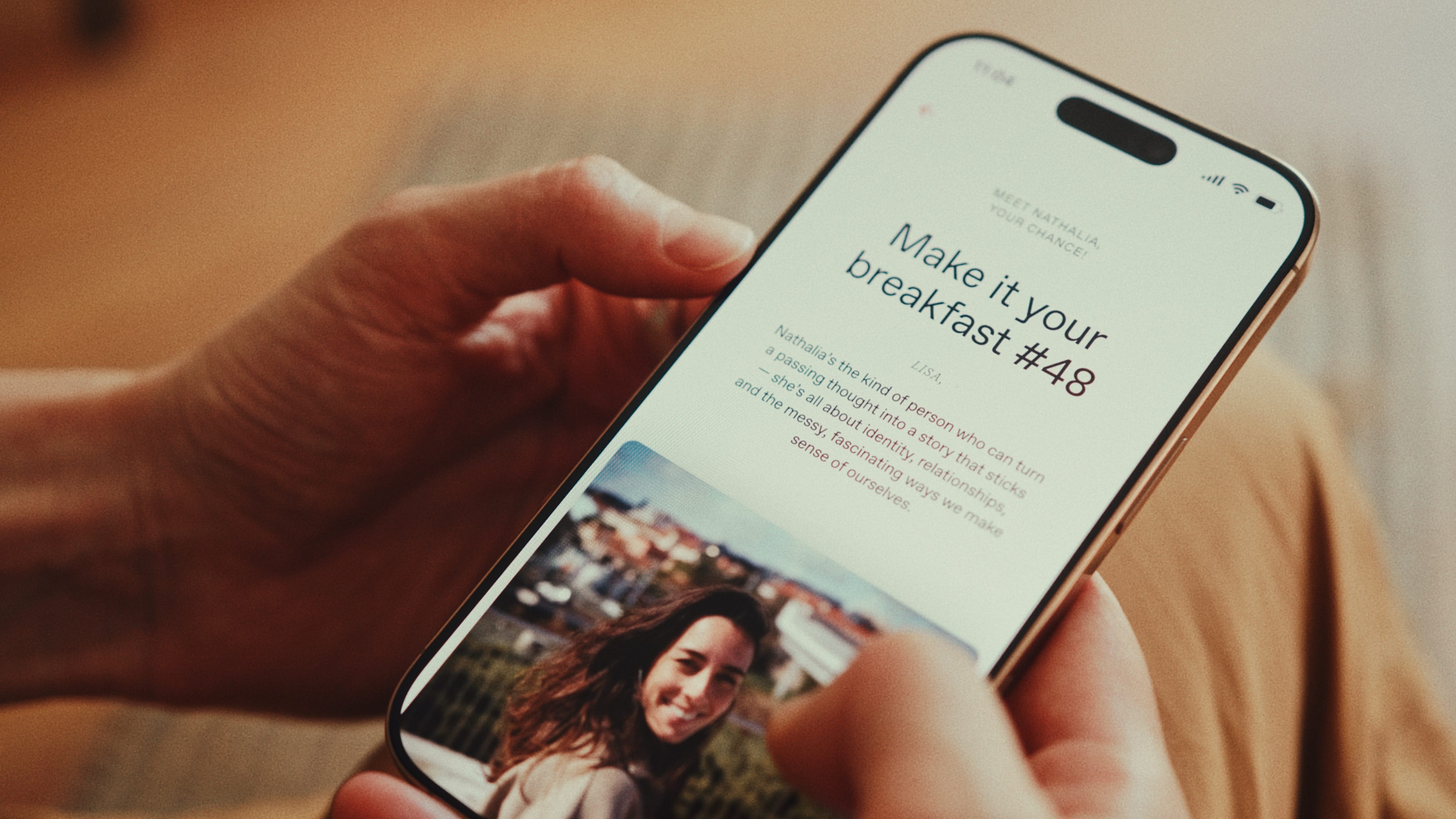
You’re in almost 30 cities1 now. Was there a moment when the growth really inflected, or was it always a steady process?
Eteri: What we never anticipated was how quickly the idea could spread. When you build a social app in this global world, where everyone is connected and people have friends all over the world, people start hearing about it in other cities.
At some point, we needed to figure out how to actually launch those cities. Technically, we can just turn on a button, but there needs to be some critical mass.
We eventually decided to stop opening new cities and focus on the places where we were already live. For the past four months, we have not launched in any new cities, even though we have people waiting. Every week, we receive emails saying, “Please launch in Seoul,” “Come to Jakarta,” or “Denver, please.” It is challenging to resist.
Let’s say 10 million people joined The Breakfast tomorrow. I would not be happy about that, because I know we are still figuring out how the app should look, the right number of push notifications, and the right way to connect people.
In Lisbon, you have partnerships with cafés where Breakfast members get 10% off their bill. What does the future of those partnerships look like?
Eteri: The breakfast place is such an essential part of the whole experience because this is where people go and where they meet. Adding your favourite breakfast spots is part of your profile. As more people join, those ratings become a true list of the top local spots.
What we are doing right now is a pilot. The goal is to give people more incentive to go out more often, but it is also about creating the feeling that you are part of something bigger.
Eventually, we want to build these partnerships in every city where we are present. You travel, you meet people, you get discounts. You feel welcome when you walk into a place. It feels like they know you. Someone on The Breakfast has chosen it for you.
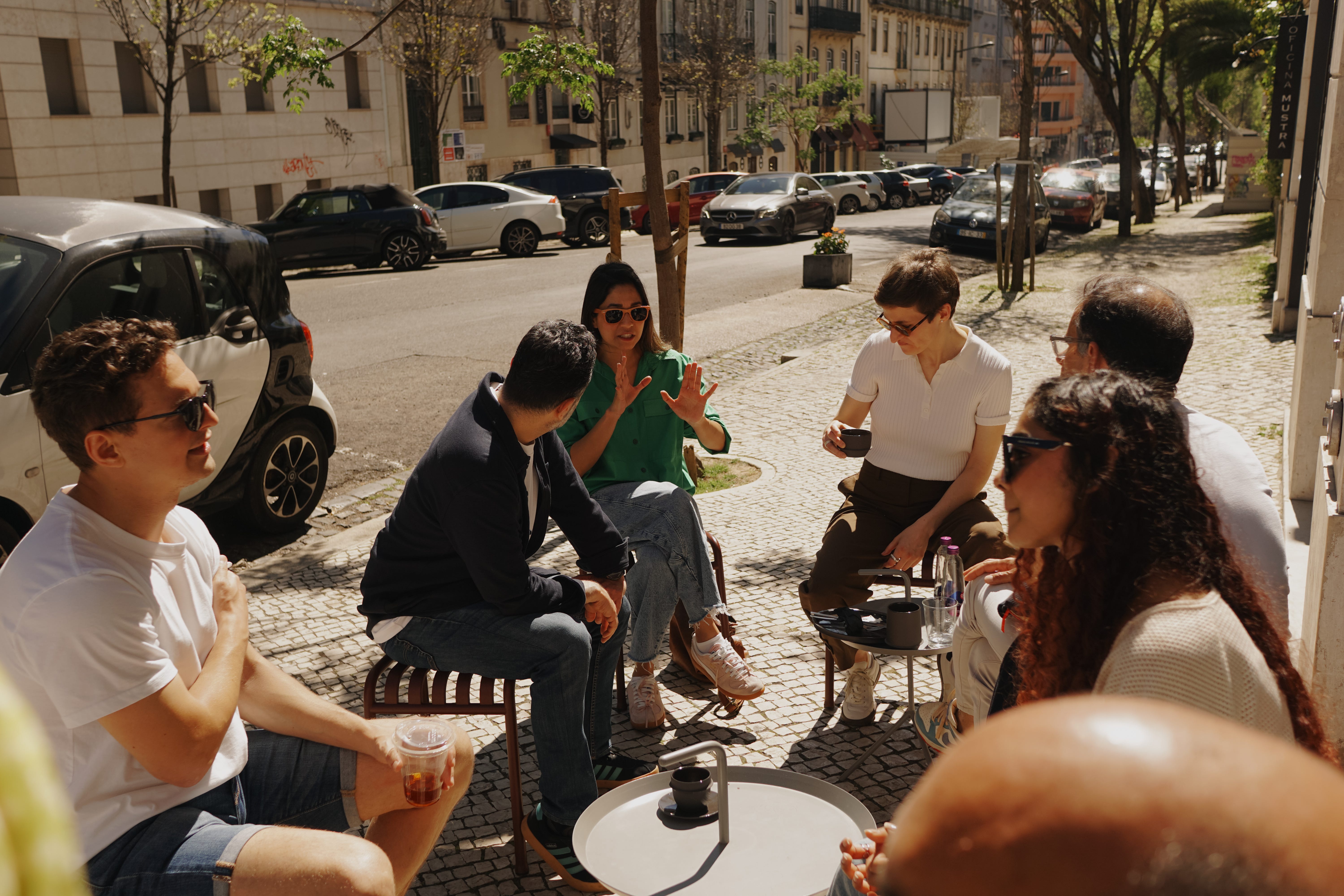
A few months ago, you wrapped up a round of community fundraising on Wefunder. How did that idea come about?
Eteri: Last year, we went to San Francisco and met Breakfast members there. A lot of the members in San Francisco work at companies like Uber, Stripe, and Instagram. Whenever we met someone, the subject of fundraising would come up. They would say, “I love what you are building. I have met so many friends. Let me put in a small cheque.”
Then we realised that half of our investors had joined as members first, but we had never connected those two facts. There was this aha moment in San Francisco.
How does this fundraise change the trajectory of The Breakfast?
Eteri: We now have more ambassadors. Once members became investors, they would say, “I know this person. I know this company. I can connect you. You could partner.” They know the product. They have feedback, ideas, and connections. It makes the whole thing more interconnected.
Lisa: The round made us step back and decide what to prioritise. Rather than adding more features, we chose to focus on improving the core experience. We have so many ideas for how to make the product more useful, beautiful, and fun, but we cannot pursue them all at once. Right now, the work is about stripping away what is unnecessary and polishing the most important parts, one by one, so the app works better for the people already using it.
Is there something you think may not be popular with everyone, but feels important to your ethos as founders?
Eteri: The way big things start is that there is a certain problem, a few people see it, and they join. That community grows, but it takes time.
If the wrong people join at the very beginning and they do not understand the idea, it is not going to work. Some people join and say, “I am so tired of dating apps, but please let me choose genders and give me swiping.” They still need to see the next step towards the connection. Interestingly, we see them leave and then come back half a year later saying, “Now I get it.” They needed their own time to think about the problem and about their lives.
Lisa: It is like revolutions. Revolutions are never carried out by 99% of people. They are started by the 1%. You always need to find that one or two percent.
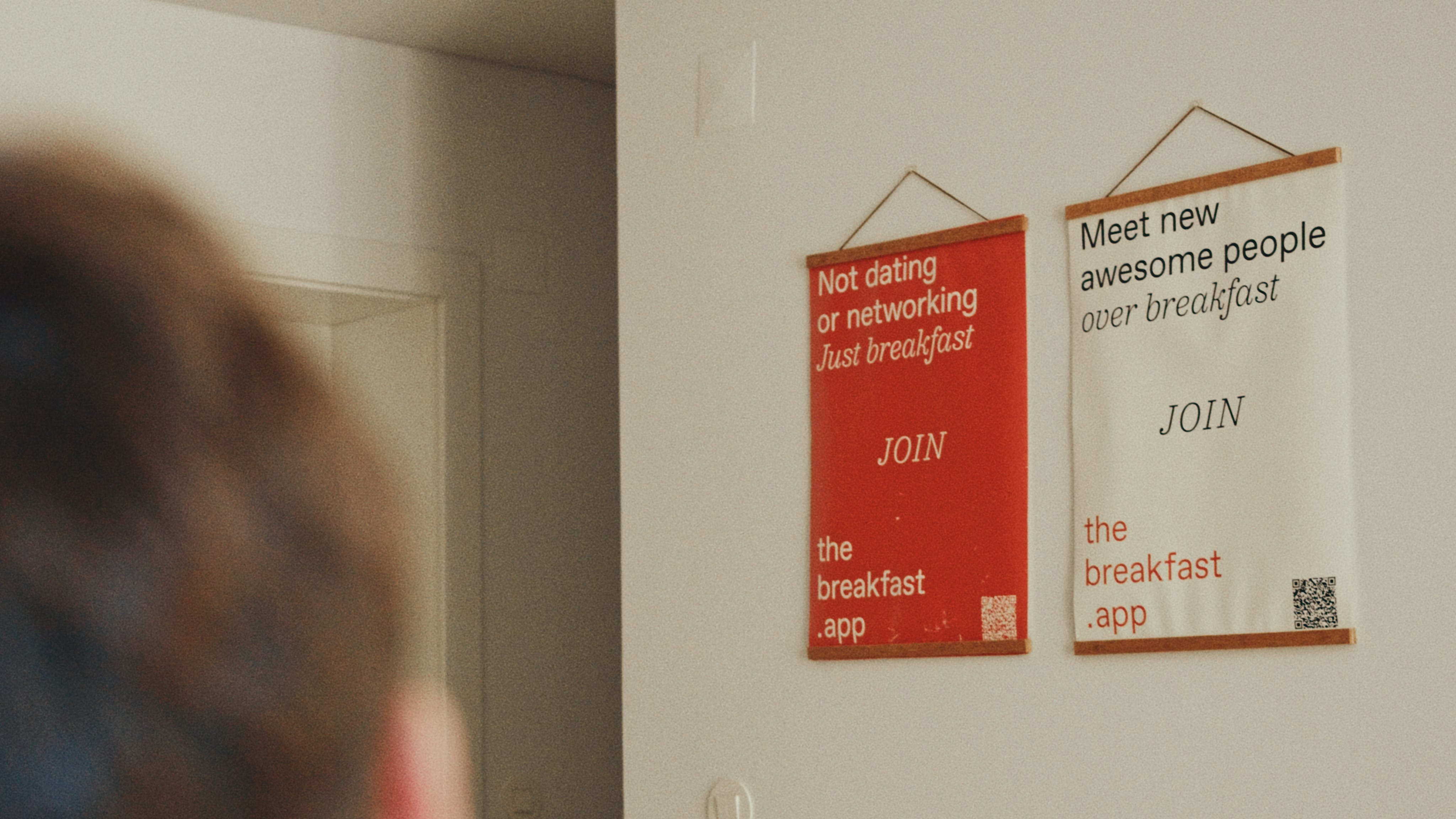
What is something you have discovered about yourselves while building this?
Eteri: The evolution for me was going from building something to please my ego, to focusing on the craft of building something good and learning about all kinds of people.
Lisa: What I discovered is that there is this constant feedback loop between your vision and reality.
Sometimes you need to decide whether you are pushing your vision or submitting to reality because it is the realistic thing to do. You are in a constant negotiation. Sometimes you have to work with reality, and sometimes you can twist it a little.
How do you decide when to push towards your vision and when to accept reality?
Eteri: It is a gut feeling, but it is also about the principles that are core to you. If you do not have principles, you will constantly shift from one thing to another. They guide you all the time. Sometimes they are wrong, but I think it is fair to try several times. Then you see that reality does not respond, and that is the answer. The principles stay the same. It is just the way you approach them that might change. Your principles are something you do not trade.
A question I like to end with: who is someone you are curious about, and if you had the chance to have breakfast with them, what would you ask?
Eteri: I talk about Oprah Winfrey a lot. I think she is so deeply interested in the psychological side of things—how you were brought up, and how you ended up where you are now. I would like to have a conversation with her.
Lisa: It would be Jung, or someone from the humanist side of things. Maybe I would go deeper into history and talk to Freud.
I think they were among the first people to articulate that something inside us drives what happens outside. Before that, there was not really a notion of that. Everything was just life happening.
My question would be: what did you see in people that made you think there was something behind them that we do not see or think about?
The Breakfast has just passed 63,000 members! Try it out for yourself, or you can learn more on their website.
If you do give it a go—or you’re already a member—I’d love to know how you find it!
Objectively is a study in paying attention to people, their taste, and the lives they build around it. It’s also simply a record of what tickles my brain: people doing things differently, beautiful lived-in spaces, ideas that make me pause.
They were live in 34 cities when we spoke, but 27 at the point of writing—so this has been updated to reflect that.